7 Steps to Land Your First Interview (And Why Most Candidates Get Stuck at Step Zero)
Here's the hard truth: You're applying to jobs and getting ghosted because your approach is fundamentally broken. Not your resume. Not your qualifications. Your approach.
I've watched this pattern repeat 800+ times. A candidate spends 3 hours polishing their resume. Writes a generic cover letter. Hits "apply" on 50 jobs. Waits. Nothing happens. So here's how to get an interview. But, first let us understand what goes wrong.
One of two things goes wrong:
Your application never reaches a human (it's stuck in an ATS filter, suffocating in bad formatting)
Your application reaches a human, they scan for 6 seconds, and move to the next one
Both problems have solutions. But you have to address them systematically. Not with luck. Not with hope. With a concrete process.
At Wynisco, we've placed 800+ professionals in US jobs. We've placed people from 50+ countries, visa holders, career switchers, people coming back from breaks. The one common thread in every successful placement? They followed this 7-step system. The people who didn't? They're still applying and waiting for calls.
This is that system. Raw, unfiltered, based on real data from 800+ placements and thousands of applications. So how to get more interviews.
The Reality: You're Competing Wrong
Let me be blunt: The way you're job hunting right now is designed to fail.
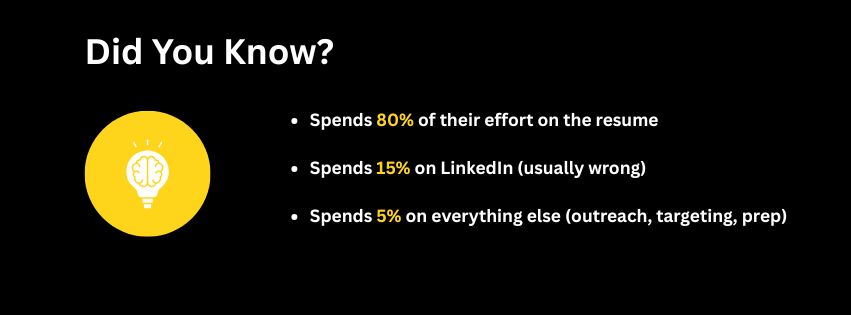
Here's what the average candidate does:
Spends 80% of their effort on the resume
Spends 15% on LinkedIn (usually wrong)
Spends 5% on everything else (outreach, targeting, prep)
Hopes the application fairy will call
Here's what successful candidates do:
30% on targeted company research
20% on resume + LinkedIn alignment
20% on direct hiring manager outreach
20% on interview preparation
10% on the actual job application
Most of you are playing a lottery. The people succeeding are playing chess.
In 2024, I looked at the applications of 47 candidates in our program. The ones who got interviews in under 3 weeks did something different. They didn't apply to more jobs. They applied to fewer jobs, but smarter. They didn't have shinier resumes. They had targeted resumes. They didn't wait for HR. They reached out to hiring managers directly.
This is their playbook.
How to Get Your First Interview and Why is it the Hardest Interview
Before the steps, understand this: Getting your first interview is harder than getting your second.
Not because the first company is picky. Because you're starting from zero momentum.
Here's what I've seen happen:
First interview call comes in. You panic. You overthink. You either bomb it (imposter syndrome kicks in) or you kill it (suddenly you believe you can get more). Either way, something shifts. You're no longer a stranger to the process. You're someone who got a callback. That matters psychologically.
After that first interview, your second one comes faster. Your third faster than your second. Why? Because now you know it's possible. Because you have data on what questions they ask, what they value, what makes you stand out.
The actual skill level hasn't changed. Your confidence has. So, you start to get more interviews.
So the system isn't about being perfect. It's about getting enough of them to happen that momentum takes over.
Think about it differently. Every interview comes from a chain of decisions:
Your application reaches a human (ATS didn't kill it)
They decide you meet minimum qualifications (resume scan, 6 seconds)
They think you're worth their time (cover letter, LinkedIn, or direct outreach)
They pick you over other candidates (positioning, fit, visibility)
Most candidates optimize for one of these gates. Usually the resume. That's why they fail.
We're optimizing for all four. 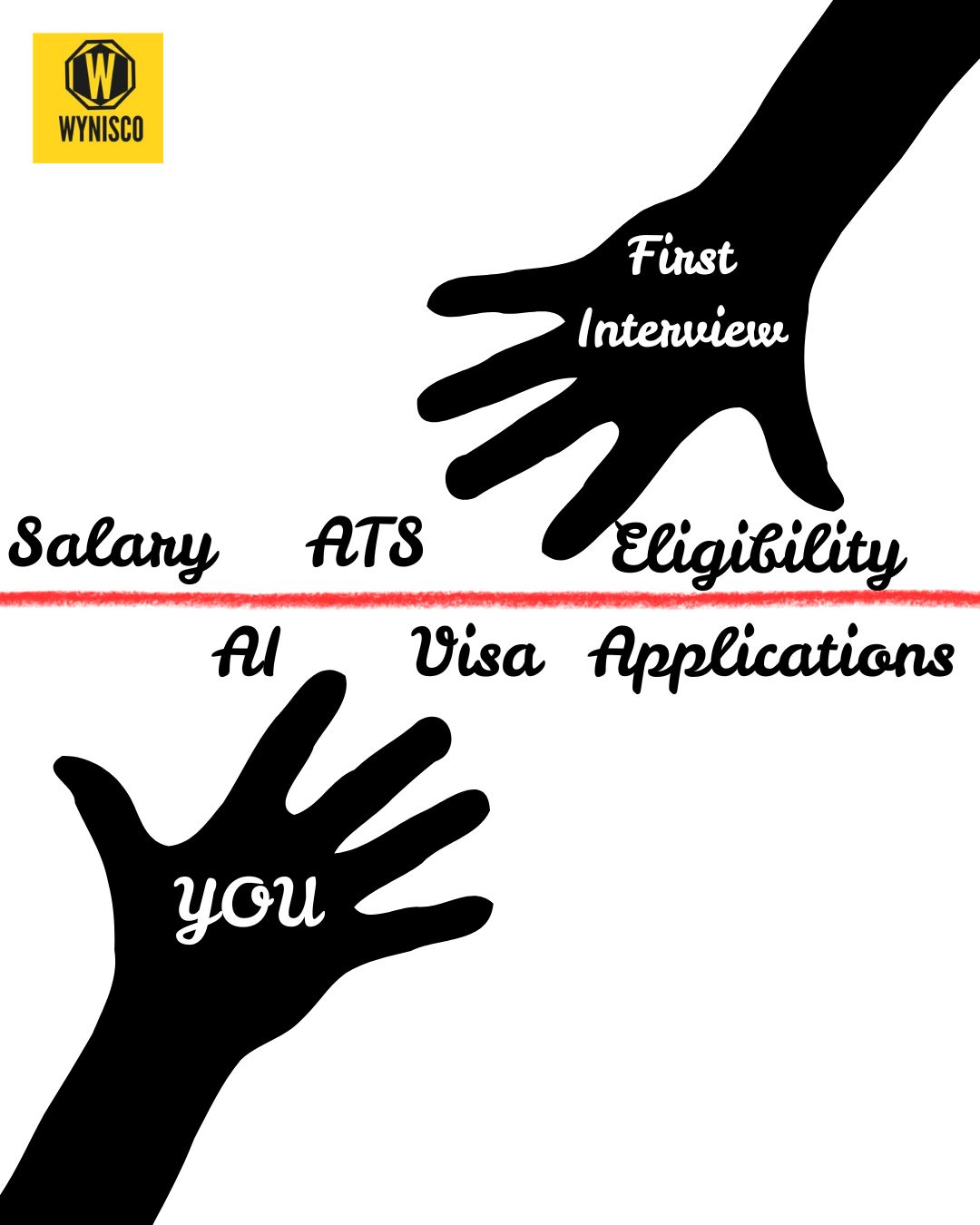
Step 1: Pick Your 20 Companies (Ignore Job Boards for Now)
This is going to feel wrong because you've been taught the opposite.
But here's what I know: Candidates who apply to 15-25 specific companies get more interviews than candidates who apply to 100+ random jobs.
This isn't opinion. I've watched it play out.
When a recruiter sees your profile and you've applied to an Account Manager role, a Sales role, a Product role, AND an Engineering role in the same month, they think one of two things: "This person doesn't know what they want" or "This person will take anything because they're desperate."
Neither signals strength.
Here's what to do instead:
Build a target list of 20 companies you actually want to work for. Not 100. Not 5. Twenty.
Start narrow:
What 2-3 industries excite you?
What company sizes? (I prefer 50-500 employee range — actively hiring, not bureaucratic)
What geographies?
Which companies are hiring right now? (Check their careers page, recent funding news, LinkedIn hiring patterns)
Use these:
LinkedIn: Filter by industry, size, location. Look at recent hires (they're probably hiring in those roles)
Crunchbase: See who just raised funding. Funded companies = hiring mode
Glassdoor: Check recent reviews. Culture matters. Bad reviews = bad interview experience
Company news: Check their official careers page or press releases
Once you have your 20, here's the game-changer: Research their hiring patterns. 
Look at jobs posted in the last 30-60 days. What roles come up repeatedly? What skills do they consistently want? How long do similar roles stay open? This tells you everything about their priorities.
Example: If a company posted the same role 3 times in 6 months, they have hiring challenges. They either need senior people fast or they have retention issues. Either way, you know what you're walking into.
The psychology at work: When you mention something specific about a company to the hiring manager ("I noticed your expansion into Southeast Asia last month, and I've built teams in emerging markets"), they immediately think differently about you. You're not applying blindly. You're serious.
This is the foundation. Get this wrong and nothing else matters.
Step 2: Optimize Your Resume. (For Robots AND Humans)
Your resume has two audiences right now:
Applicant Tracking Systems (ATS) — Automated filters that scan for keywords
Human recruiters — Who spend 6 seconds deciding if you're worth the next 6 minutes
Most resumes fail one or the other. Some fail both. We need to win both.
For the ATS (Keywords):
ATS systems scan for exact matches to the job description. If you don't include the right keywords, you never reach a human.
Here's the process:
Read the job description. Copy-paste it into a document.
Highlight every skill, tool, and qualification. Most job descriptions have 10-15 key terms hiding in there.
Weave these terms naturally into your resume. Don't stuff them like a spam email. Place them where they belong — in your experience descriptions.
Example:
Job wants: "Project management experience with Asana"
Bad resume: "Managed projects"
Good resume: "Managed cross-functional projects using Asana, coordinating 5+ stakeholders and delivering on-time milestones"
The good version has the keyword (ATS happy) and also shows impact (humans happy).
For the Human (Impact):
A recruiter opens your resume. They scan for 6 seconds:
Your job title (does it match the role?)
Your most recent role (is the experience relevant?)
Quantified results (did you actually do anything?)
That's it. Then they decide: "Worth the next 30 seconds" or "Delete."
So build your resume around numbers that matter:
Revenue generated: "Grew territory from $1.2M to $2.8M revenue in 18 months"
Efficiency: "Reduced onboarding time by 40% through process redesign"
Quality: "Achieved 99.2% customer satisfaction (industry average was 92%)"
Growth: "Built team from 2 to 8 people; 100% promotion rate"
Every bullet should answer: "So what? Why does this matter?"
What actually works:
Dos | Don'ts |
|
|
|
|
|
|
|
|
| |


I'm not a resume expert. But I've reviewed 800+ resumes before placements happened. The ones that moved forward? They followed this formula. The ones that didn't? They sounded like they were written for a 1990s HR department.
Sign up for my weekly newsletter where I keep sharing hacks for to land interviews better and faster!
Step 3: Write a Cover Letter That Actually Gets Read
Here's the truth: Nobody reads cover letters unless the resume already interested them.
But if your resume caught their attention, the cover letter becomes your chance to tell a story about why you're serious.
Most cover letters read like AI wrote them. "I am writing to express my strong interest in this position..." Yawn.
Your cover letter should answer: Why this company? Why you? Why now?
The Formula (Works Every Time):
Paragraph 1 — The Hook (Why This Company):
Start with something specific. Not generic fluff. Specific.
Weak: "I'm excited about your mission in fintech"
Strong: "Your recent launch into embedded payments aligns with my experience building payment integrations for e-commerce platforms, and I want to be part of that expansion"
Notice? You did your homework. You're not spray-applying. You understand their business.
Paragraph 2 — The Bridge (Why You):
Take one achievement from your resume and expand it. Show how it solves a problem mentioned in the job description.
Weak: "I have 5 years of product management experience"
Strong: "In my last role, I managed product roadmap for a B2B SaaS platform and increased feature adoption from 12% to 45% through user research and strategic prioritization—the exact type of growth your team is targeting"
You're not listing credentials. You're showing the exact problem you solved that matches their exact problem.
Paragraph 3 — The Ask (Why Now):
Express genuine interest. End with an invitation, not a demand.
"I'd love to discuss how my experience building scalable product strategies could contribute to your roadmap. I'm available for a brief call this week if that works."
Notice: "available for a brief call" (reasonable, flexible) NOT "I look forward to hearing from you" (passive, weak).
Keep it short: 3-4 sentences per paragraph. A recruiter will spend 60 seconds on this. Max. Give them what they need in that window.
Step 4: Build a LinkedIn Profile That Recruiters Actually Click On
LinkedIn is where recruiters pre-screen you before your resume even gets opened.
If your profile is sparse, outdated, or misaligned with your resume, you've already lost. I've had candidates tell me "My LinkedIn hasn't been updated in 3 years." Then they're surprised when they don't get interview.
Here's what matters:
Your Photo (30 seconds to trust you):
Use a professional headshot. Not a selfie. Not a group photo. A headshot. You smiling slightly, wearing business-appropriate clothes, clean background.
One recruiter told me: "If the photo looks unprofessional, I assume the resume is too."
Your Headline (Your first real estate):
Most people write: "Marketing Manager at XYZ Company"
Instead, use this formula: [Your Specialty] | [Who You Help] | [How You Help]
Weak: "Marketing Manager | B2B SaaS Professional"
Strong: "Growth Marketing Lead | Helping B2B SaaS Companies Scale Customer Acquisition from $0 to $1M ARR"
The strong one tells a recruiter what you specialize in, who needs you, and what problem you solve. It's searchable. It's specific. It stands out.
Your About Section (Write like a human, not HR):
3-4 short paragraphs. First paragraph hooks: "I help [type of company] achieve [specific outcome] through [your approach]."
Then explain your philosophy, your background, and end with: "I'm always interested in connecting with [target types] or learning about opportunities in [industry/role]."
This signals: You're open to opportunities without being desperate.
Your Experience Section (Tell stories, not duties):
Don't copy-paste your resume. Tell mini-stories.
Example: "Led go-to-market strategy for payment product launch in 5 Southeast Asian markets. Achieved $2.3M revenue in year one. This taught me that localization isn't translation—it's understanding market psychology. Now I obsess over market entry strategy in every role."
This is way stronger than: "Responsible for launching products in multiple markets"
Your Connections (Quantity + Quality):
Aim for 500+ connections. Not 5,000 random people. 500 relevant people in your industry, at target companies, alumni networks.
Quality signals to recruiters: This person knows the right people.
Keywords Everywhere:
Recruiters search LinkedIn. If your target role is "Senior Product Manager in B2B SaaS," those exact terms need to appear in your headline, about section, and experience descriptions.
Step 5: Find the Hiring Manager and Make Them Know You Exist
This is the step that separates people getting interviews from people getting ghosted.
Here's what most people do: Submit through the job board. Get lost in the pile. Never reach a human.
Here's what actually works: Get your resume in front of the actual hiring manager before they see the job posting.
How to find the hiring manager:
1. LinkedIn Research: Go to the company's LinkedIn page. Look at the department that's hiring. If it's a "Senior Product Manager" role, find the VP of Product. Then look at their direct reports. Someone manages this hiring. Reach out to that person directly.
2. Use tools:
The Org — Shows company organizational charts
Apollo — Search employees by company/title, get email addresses
Hunter.io — Finds email formats for companies
LinkedIn — Simple, but effective. Start here first (free).
3. Company news: Check recent press releases. New initiatives, new departments, new products — they mention the leader. That's your hiring manager.
How to reach out:
Cold outreach works when it's:
Specific (you did research)
Brief (respects their time)
Valuable (gives them a reason to respond)
Sample outreach email:
Subject: [Specific insight] + Your name
Hi [Hiring Manager Name],
I noticed your team launched [specific product/initiative] last month. In my role at [Previous Company], I led a similar expansion and grew feature adoption from 12% to 45%.
I'm genuinely interested in what you're building and would love to chat about how my experience could contribute.
Resume attached.
[Your Name]
What's happening:
You showed research (specific launch mention)
You provided a specific result
You made it about their needs, not yours
You were concise (3 short lines)
What happens next:
Best case: They write back and schedule a call
Good case: They forward your resume to the recruiter with "This person seems like a fit"
Acceptable case: No response. You follow up 5 days later: "Hi [Name], wanted to follow up on my previous note. I also applied to the [Role] position and believe I could add value. Happy to discuss."
Worst case: They don't respond to the second follow-up either. Move on. Apply to the next company. Don't become the person who emails six times.
The magic moment:
When a recruiter sees your resume WITH a hiring manager's endorsement, your interview rate jumps from 2-5% to 20-40%.
That's not exaggeration. That's what we see consistently at Wynisco.
Step 6: Apply Strategically (Where, When, and How Matter More Than You Think)
You've researched. You've optimized. You've found the hiring manager. Now it's time to apply.
But even this step matters more than most people realize.
Where to apply (Priority order):
Company careers page (best — direct to their ATS, better visibility)
Direct email to hiring manager (second best — bypasses ATS entirely)
LinkedIn (acceptable — reach is less predictable)
Indeed/Glassdoor/job boards (last resort — volume kills visibility)
Why the priority order? Job board applications get lost in volume. Their ATS might not track them well. Company website applications go directly into their system. Direct email to the hiring manager? They control if you go through or not.
When to apply (Timing):
Research suggests:
Day of week: Tuesday-Thursday (Monday = overwhelmed, Friday = checked out)
Time: 10 AM - 2 PM (peak recruiter attention)
Speed: Within 48 hours of posting (algorithms favor fresh applications)
This might feel like microoptimization. But with 50-200 applicants per job, being in the first 10% gives you 2-3x better odds.
How to apply:
Customize everything. Replace [Company Name] in your template. Update cover letter. Make it specific to THIS role, not a generic version.
Add a personal touch. If you found the hiring manager, reference them: "I reached out to [Manager Name] about this opportunity and am excited to apply formally through the system."
Track your applications. Simple spreadsheet:
Company name
Role title
Date applied
Contact person (if known)
Follow-up date
Notes
Why? So you remember to follow up and you see what's working.
Follow-up is where most candidates fail:
Apply Monday? Follow up Thursday:
"Hi [Name],
I applied to [Role] at [Company] earlier this week. I'm genuinely interested and would love 15 minutes to discuss how my experience fits.
[Your Name]"
No response by next Tuesday? One final follow-up (and only one):
"Hi [Name],
One last check-in on my application for [Role]. I'm very interested. Understand you're busy.
[Your Name]"
After that? Move on. Don't chase. There are 19 other companies on your list.
Step 7: Prepare for the Interview Like Your Life Depends On It
You got the call. Interview scheduled. Now most candidates wing it.
Don't.
Your preparation matters more than your natural charisma. Full stop.
One Week Before:
Research the actual people interviewing you.
Not just the company. The people. Go to their LinkedIn. What's their background? Where did they work? What do they emphasize? What does their bio tell you?
This does two things:
You find common ground (same university, worked at similar company, shared interest)
You understand what they value
Example: If your interviewer spent years at other startups, they value speed. If they came from big tech, they value process. Tailor your examples accordingly.
Identify your three selling points.
Not a list of skills. Three specific reasons why you're perfect for this role at this company.
Not: "I have 7 years of marketing experience"
But:
"I've scaled customer acquisition for B2B SaaS in competitive markets—exactly your situation"
"I built and managed remote teams, which matches your team structure"
"I'm familiar with your product and have specific ideas to improve your conversion rate by 15%"
These are specific to them AND the role. They show homework.
Prepare 2-3 stories using the STAR method:
Situation → Task → Action → Result
Prepare stories that show:
Problem-solving (they'll ask this)
Handling difficult people (they'll ask this)
Professional growth (they'll ask this)
Collaboration (they'll ask this)
But make them specific to their industry and challenges. If they're in fintech, your story about regulatory compliance matters. If they're in healthcare, your story about scale matters.
Two Days Before:
Test your technology (if video):
Test webcam, audio, internet. Join 15 minutes early. Have backup internet (phone hotspot). Tech problems are never an excuse. They're a sign you didn't prepare.
Research the location (if in-person):
How long is travel? Where to park? Building security? Check-in desk? Know it all so you're not flustered.
Arrive 10 minutes early. Not 30 (looks desperate). Not 5 (looks unprepared). 10.
One Day Before:
Sleep well. Don't cram.
Most interview anxiety comes from uncertainty. You've removed uncertainty by preparing. Now relax.
Here's the reframe: Even if you bomb this interview, you've proven you can get them. There will be more.
During the Interview:
First 60 seconds matter more than you think.
Stand/sit up straight. Make eye contact. Smile genuinely. Your energy in the first minute sets the entire tone.
Answer fully but concisely.
"Tell me about yourself" — Don't recite your resume. Tell the 90-second story of why you do what you do.
"I started in finance but realized I was more energized by product. That led me to product management, where I found my passion: building products users love. I'm excited about this role because [specific reason about their company]."
Story → Transition → Relevance.
Ask thoughtful questions.
Bad: "What's the salary?" "How much vacation?"
Good:
"What does success look like for someone in this role after 90 days?"
"How is this team structured? Who would I work with most closely?"
"I noticed you recently [specific initiative]. How does this role contribute?"
Listen 60% more than you talk.
Most candidates do the opposite. Listening shows confidence.
After the Interview:
Thank-you email within 24 hours.
Not generic. Mention something specific they said. Reference a question you answered and give additional context.
Subject: "Thanks for discussing the [Role] opportunity"
"Hi [Name],
Thanks for taking the time today. I was particularly interested in how you're approaching [specific thing they mentioned]. Given my experience with [your relevant experience], I have some ideas on how to accelerate that timeline.
I'm excited about the possibility of contributing to [specific goal they mentioned].
[Your Name]"
Manage expectations:
Most companies take 1-2 weeks. If nothing after 2 weeks, send one gentle follow-up. After that? Let it go.
Focus on your other applications.
The Multiplier Effect
Here's what I know from 800+ placements:
Candidates who do 1-2 steps: 1-2% interview rate Candidates who do 4-5 steps: 5-8% interview rate Candidates who do all 7 steps: 15-25% interview rate
That's not linear. That's exponential.
Because each step makes the next step work better.
From a recruiter's perspective, you look like someone who:
Researched the company (targeted application)
Knows how to present yourself (LinkedIn, resume)
Takes the process seriously (cover letter, outreach)
Is prepared (interview performance)
At what point do they doubt you? Nowhere. Because you've removed doubt at every stage.
Most candidates do one thing well. The people who succeed do seven things well enough.
What I Know About Your First Interview
This system works. I wouldn't write this if it didn't work.
But here's what you need to know: You will get rejected. Multiple times. Even after you get your first interview. Even if you follow this perfectly.
That's not a failure. That's a reflection of the fact that "fit" is partly out of your control.
But here's what you now know: Every rejection is data.
Didn't get called? Application strategy needs work.
Got called, didn't move forward? Interview prep needs refinement.
Got an offer? You've proven it's possible. The second one comes faster.
The goal isn't one perfect interview. The goal is enough interviews that one turns into an offer.
Math:
20 applications
20% interview rate = 4 interviews
30% offer rate = 1.2 offers (statistically, one offer)
That's the goal. And this system gets you there.
I've placed people from 50+ countries. I've placed visa holders, career switchers, people with big gaps in their resume, people re-entering the workforce. They all followed this system.
The system works when you work it.
Your Checklist. Use It.
Before You Apply:
[ ] Built target list (20 companies, not 100)
[ ] Researched their hiring patterns
[ ] Optimized resume with keywords + quantified results
[ ] Updated LinkedIn with headline formula
[ ] Identified 3 selling points
When You Apply:
[ ] Found hiring manager
[ ] Sent personalized outreach (specific + brief)
[ ] Customized cover letter for the role
[ ] Applied on company website first
[ ] Tracked application with follow-up date
Before Interview:
[ ] Researched all interviewers
[ ] Identified 3 selling points specific to this role
[ ] Prepared 2-3 STAR stories
[ ] Tested video setup (if virtual)
[ ] Researched location/logistics (if in-person)
During Interview:
[ ] Arrived 10 minutes early
[ ] Strong first impression (energy, posture, eye contact)
[ ] Asked 2-3 thoughtful questions
[ ] Listened 60% more than I talked
[ ] Found genuine common ground
After Interview:
[ ] Sent thank-you email within 24 hours
[ ] Mentioned specific details from conversation
[ ] Tracked follow-up date
[ ] Kept applying to other roles
Next Steps
Start today. Not tomorrow. Today.
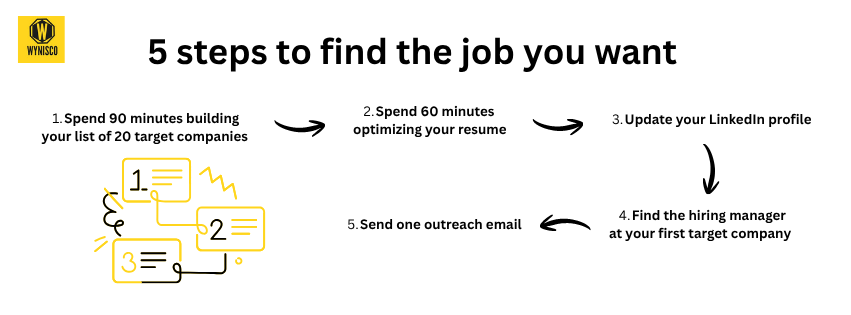
Do this:
Spend 90 minutes building your list of 20 target companies
Spend 60 minutes optimizing your resume
Update your LinkedIn profile
Find the hiring manager at your first target company
Send one outreach email
That's it. One day of work. That's your foundation.
The system only works if you use it.
I've seen this work 800+ times. I've also seen smart, qualified people not follow the system and stay stuck in the applying-and-waiting phase.
The difference isn't talent. It's discipline.
You've got this. Now go execute.
Quick note: At Wynisco, we help international candidates and visa holders land jobs in the US. We place people in Product, Engineering, Sales, Data, Design, and more. If you want personalized guidance on your job search, help with your resume, practice interviews, or direct introductions to hiring managers, we offer that service.
But honestly? This guide should work on its own. Use it. Test it. Let me know what happens.
Follow Sachin Rajgire | Wynisco Inc. | sachin@wynisco.com
Written by
Sachin Rajgire